Sixth form

Our sixth form — the lycée, the final three years leading to the Baccalauréat — is open, and pupils are studying in it now. Three years, two streams, and one examination that decides what comes next.

What it is for

The three years that decide what comes next

Until now, a pupil at Melrose finished Year 3 of middle school and left us. That is no longer the case: the school takes them right through to the Baccalauréat, in the same buildings, with a team that has known them for years.

The sixth form is a different kind of school work. Nobody chases a sixth-former for their homework: the lessons are longer, the programmes are denser, and the pupil is expected to keep their own diary, plan their own revision and ask for help before the mark drops, not after.

It is also the moment when a general education narrows into a direction. The stream chosen here shapes which university courses are open in three years' time — which is exactly why that choice is worked at, with the pupil and with you, rather than ticked in a hurry.

  • The Moroccan national curriculum, for the upper-secondary cycle.
  • Three years: the tronc commun, then the first and second year of Baccalaureate.
  • Two streams: Sciences, and Economics & Management.
  • Three languages carried on — Arabic, French and English.
  • One continuous path, from the age of two and a half to the Baccalauréat.
In brief

The sixth form in five lines

Who it is for

Pupils leaving Year 3 of middle school, generally from about the age of 15 — ours, and pupils coming from other schools.

How long

Three years: the tronc commun, the first year of Baccalaureate, the second year of Baccalaureate.

What it leads to

The Moroccan national Baccalauréat, and with it entry to higher education.

Where

On the school site, Hay El Matar, opposite Marjane, in El Jadida — the same address as the preschool, the primary and the middle school.

The three years

One year to choose, two years to prove it

Each of the three years has a distinct job. The last one cannot repair the first two.

Year 1

Tronc commun

The common core year.

A broad year, taken by everyone, whatever they go on to do. It brings pupils arriving from different middle schools up to the same standard, raises the level of the languages, and lets a teenager find out what they are actually good at before committing to a stream.

The year in which the stream is prepared — and the one in which working habits either hold or give way.
Year 2

First year of Baccalaureate

The stream begins in earnest.

The pupil is now in Sciences or in Economics & Management, and the subjects of that stream carry the most weight. At the end of the year comes the regional examination, whose marks are carried forward into the final Baccalauréat result.

The year families most often underestimate: it already counts towards the Bac.

Year 3

Second year of Baccalaureate

The national examination.

The final year: the programme of the specialisation, past papers worked through under exam conditions, and the national examination in the summer. Alongside it, applications for higher education are prepared, because several of them close before the results are out.

Continuous assessment counts here too: the year is not decided in June alone.

The streams

Two streams, chosen deliberately

We would rather run two streams properly, with teachers who know their subject, than advertise five and teach them thinly.

Sciences

Mathematics, physics and chemistry, and life and earth sciences, taken well beyond middle school level, with the languages and the humanities subjects carried on alongside them.

The final specialisation — life and earth sciences, physical sciences or mathematics — is settled going into the second year of Baccalaureate, on the evidence of two years of work rather than on a preference expressed at fifteen.

The usual routes afterwards: faculties of science, medicine and pharmacy, engineering schools and the preparatory classes that lead to them.

Economics & Management

Economics, management and accounting, mathematics applied to economic problems, and the legal and general knowledge that goes with them — a stream in which reasoning matters as much as calculation.

It suits pupils who are solid rather than brilliant in mathematics, who read and argue well, and who are drawn to how businesses, money and public policy actually work.

The usual routes afterwards: faculties of economics, law and management, business and management schools with competitive entry, and accountancy.

What we do not offer

There is no humanities stream at Melrose. A family whose child is set on letters and human sciences should know that now, before the tronc commun, and we will say so at the interview rather than let it come as a surprise a year later.

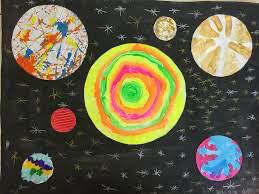
Planets painted in colour on a starry black background, made by pupils.
Science and art in the same project — a habit that starts long before the sixth form.
Choosing

How a pupil arrives at their stream

Not by averages alone, and not by what an uncle did twenty years ago.

A stream is a good fit when the pupil can carry its hardest subject for two years without being crushed by it. That is a judgement about how they work, not only about the marks they got last term — and it is a judgement three or four teachers can make together.

Our job is to put the real information in front of the family: what each stream demands week by week, what it opens afterwards, and what it closes. The decision then belongs to the pupil and to you.

When a pupil starts a stream and it plainly is not working, we say so early. Correcting course in the first term costs a great deal less than discovering it in the second Baccalaureate year.

  1. During the tronc commun

    Teachers watch how the pupil handles mathematics, science and written argument — not just whether the marks are good, but how they were obtained.

  2. A conversation with the pupil

    What they enjoy, what they find easy, what they picture themselves doing. The three answers are not always the same, and that is worth talking about.

  3. A meeting with the family

    We set out the two streams honestly, including the workload each involves, and we say which one we would recommend and why.

  4. The choice is confirmed

    The stream takes effect at the start of the first year of Baccalaureate, in Sciences or in Economics & Management.

  5. Within Sciences, one more step

    The final specialisation — life and earth sciences, physical sciences or mathematics — is settled going into the second year.

The examination

Preparing for the Baccalauréat

An examination built over two years, not over one summer.

How the Bac is built

The Moroccan Baccalauréat does not rest on a single set of papers. It combines a regional examination taken at the end of the first year of Baccalaureate, a national examination at the end of the second year, and the continuous assessment mark.

The practical consequence catches families out every year: a mediocre first Baccalaureate year is not something the second year can wipe clean. The result starts being built twenty-four months before the ceremony.

So our preparation is spread over the two years — papers in the examination format from the first term onwards, corrected against the marking criteria that examiners actually use.

Alongside that: mock examinations, intensive revision in the run-up to the papers, and work on the psychological side of the Baccalauréat — handling the pressure and walking into the hall knowing what the day will look like.

Working like a sixth-former

The method taught at middle school is not enough here. Programmes have to be revised in layers across the year, notes have to be usable months later, and an answer has to be written out in full, with its reasoning, to earn its marks.

  • Timed practice, so that a paper is finished within the time allowed.
  • Past papers, worked through and then corrected in class.
  • Revision planned in advance, spread across weeks rather than piled into the last fortnight.
  • Written argument in all three languages, which the Bac rewards everywhere, not only in the language papers.
Afterwards

The Bac is a door, not a finishing line

Preparing for higher education is part of the sixth form, not something that starts once the results are published.

Knowing what exists

Faculties, preparatory classes, engineering and business schools with competitive entry, professional courses, studying abroad: pupils choose badly mainly because they do not know what is on offer.

Applications and deadlines

Several competitive entries and application portals close well before the Bac results. Missing a date can cost a year, so the calendar is set out in the second Baccalaureate year and followed pupil by pupil.

Arriving able to work alone

What separates students who survive the first university year from those who do not is rarely the Bac mark. It is whether they can organise themselves without anyone standing over them — which is precisely what these three years are for.

Support

Getting a teenager to the Bac in one piece

Between fifteen and eighteen, results are only ever part of the picture.

Noticing early

Absences that start to accumulate, work no longer handed in, a pupil who has gone quiet: in a school of this size these things are seen, and parents hear about them while something can still be done.

Rules that hold at sixteen

Punctuality, attendance, respect for staff and for classmates, phone use: sixth-formers are given more freedom than younger pupils, and the rules that remain are applied to everyone in the same way.

Pressure, and confidence

The Bac year weighs on families as much as on pupils. Being frank about where a pupil actually stands, early enough to act, does more for confidence than encouragement that nobody believes.

Day-to-day school life

Worth knowing

From the age of two and a half to the Baccalauréat, in one school

With the sixth form open, the path here is complete: preschool, primary school, middle school, sixth form. A family who enrols a three-year-old no longer has to find another school at eleven, at fifteen, or at all.

That continuity is not only convenient. The teachers who prepare a pupil for the Bac have access to years of history: what they were like in Year 6, which subject they lost their confidence in, what made them pick it up again. Nothing has to be reconstructed from a transfer certificate.

Pupils arriving from other schools are of course welcome at every level of the sixth form, and are followed closely through their first term with us.

Frequently asked questions

What parents ask us

Is the sixth form already open?

Yes. The sixth form is open and pupils are enrolled in it now. It follows on directly from our middle school, on the same site in Hay El Matar, so a child can now come to us from the age of about 3 and leave with the Baccalauréat.

Which streams do you offer?

Two: Sciences — life and earth sciences, physical sciences and mathematics — and Economics & Management.

We do not offer the humanities stream, and we would rather say so plainly than have a family discover it in the middle of the tronc commun.

When does my child have to choose their stream?

The choice is made during the tronc commun, the common core year, and takes effect in the first year of Baccalaureate. Within Sciences, the final specialisation — life and earth sciences, physical sciences or mathematics — is settled going into the second year.

Nobody decides alone: we talk it through with the pupil and with you, on the evidence of how the year has actually gone.

How is the Baccalauréat awarded?

It is not one examination in one summer. The Moroccan Baccalauréat combines a regional examination taken at the end of the first year of Baccalaureate, a national examination at the end of the second year, and the continuous assessment mark.

In practice, the result is already being built in the first Baccalaureate year — which is why we prepare for it from that point rather than in the final spring.

Can a pupil join the sixth form from another school?

Yes. Pupils who did their middle school with us move up without re-applying, and we also take pupils from other schools.

For those arriving from elsewhere we look at the last two school reports and talk to the family, so that the year and the stream we agree on are ones the pupil can genuinely cope with.

A question that is not here? Write to us or call 05 23 37 16 14.

Enrol your child in the sixth form

Tell us the year you are after and the stream you have in mind: we will call you back to arrange a visit, an interview and the paperwork.

Call WhatsApp